What is an Apparel Buying House ERP? A Complete Guide
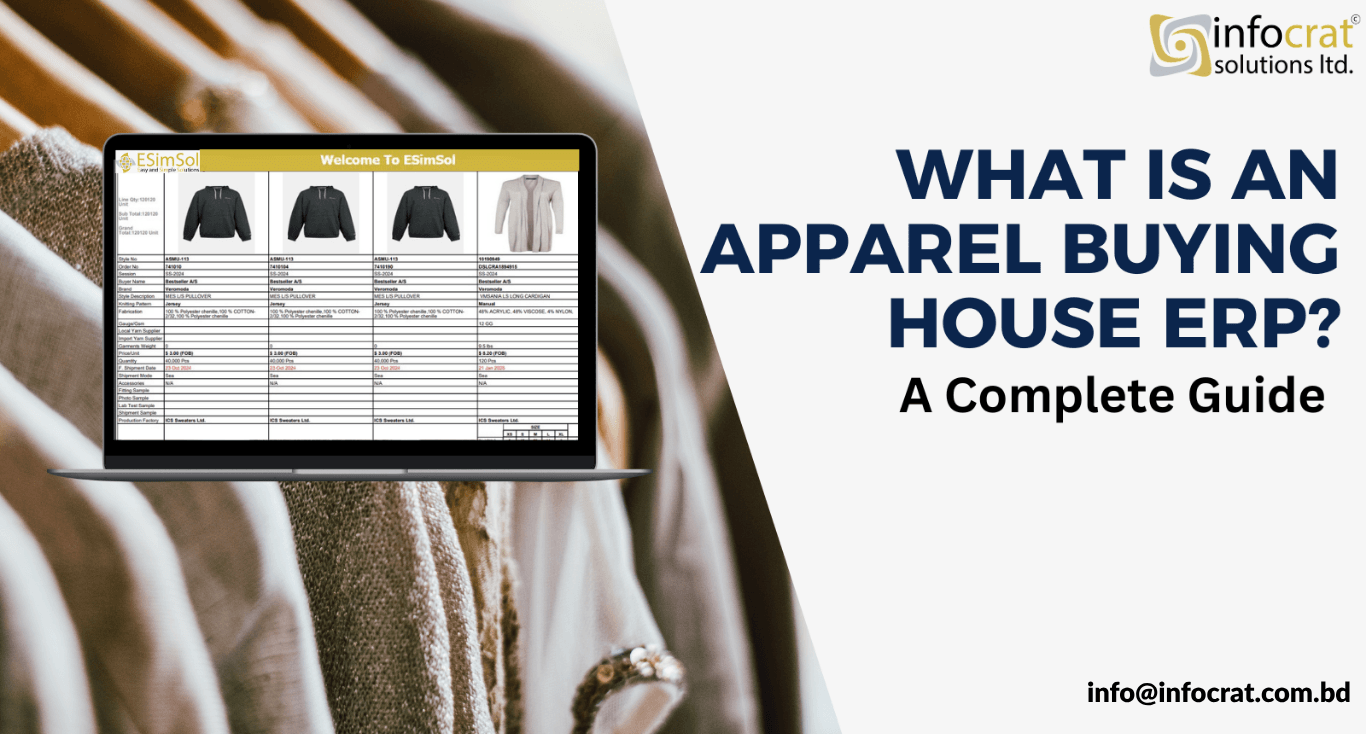
An Apparel Buying House ERP is a specialized software that automates garment supply chain management, vendor coordination, order processing automation, and quality control. ESimSol Buying House ERP ensures efficiency in merchandising, sourcing, and production tracking.
Key Takeaways
- ERP for buying houses streamlines every stage of operations, including costing, sampling, sourcing, production, QC, and delivery.
- ESimSol Buying House ERP integrates financial accounting, production monitoring, and supply chain management.
Cloud-based/ customizable ERP for apparel enhances efficiency, minimizing delivery failures and optimizing workflows.
Introduction:
The apparel and garment industry is highly competitive, requiring precision, speed, and coordination across multiple stakeholders. Apparel Buying houses act as intermediaries between manufacturers, suppliers, and international brands, ensuring smooth operations from order placement to final shipment.
Managing these intricate workflows manually is time-consuming and error-prone. An Apparel Buying House ERP like ESimSol revolutionizes the industry by automating order tracking, sourcing & Supply, time action plan, supply chain management, and commercial activities. This guide explores how ERP systems empower buying houses to enhance efficiency and ensure seamless apparel production tracking.
What is a Buying House?
A buying house serves as a bridge between global apparel brands and local garment manufacturers. These agencies manage sourcing, quality control, price negotiations, and logistics to ensure smooth production and timely delivery.
Key Operations in a Buying House
- Order Processing & Merchandising – Managing client orders, tracking samples, and finalizing cost sheets.
- Sourcing & Vendor Management – Identifying suppliers, negotiating pricing, and procuring raw materials.
- Production Monitoring – Ensuring timely execution of bulk orders while maintaining quality standards.
- Compliance & Quality Control – Meeting international labor laws and ensuring product quality.
- Logistics & Shipment – Coordinating with freight forwarders to ensure on-time delivery.
Without ERP software, managing these operations manually leads to inefficiencies, miscommunication, production delays and ultimately, order cancellations.
What is an ERP System for Buying Houses?
Definition & Purpose
An ERP system for apparel buying houses is a centralized platform that integrates merchandising, order tracking, sourcing, production planning, and logistics management. It enables buying houses to automate workflows, enhance visibility, improve coordination across departments, ensure on-time delivery and ultimately maintain strong business relationships.
How is Buying House ERP Different from Traditional ERP?
Unlike generic ERP solutions, an Apparel Buying House ERP is tailored for the industry, addressing:
✔ Order processing automation with real-time tracking
✔ Sourcing and supply management
✔ Integrates commercial operations.
✔ Manages compliance, DSS, and document creation.
✔ Financial integration resolves supply chain issues from sampling to bulk production.
ESimSol Buying House ERP ensures end-to-end visibility, optimizing the entire apparel supply chain from style management to final shipment.
Key Features of an Apparel Buying House ERP:
1. Merchandising & Order Tracking
- Technical Sheet Management
- Sample Order & Costing
- Time & Action Plan (T&A)
- Order Recap & PO Management
2. Vendor & Supplier Management
- Raw Material Booking & Consumption
- Purchase Requisition & Order Processing
- Work Order & Dyeing Order Management
3. Inventory Control System
- Material Requirement Planning (MRP)
- Warehouse & Stock Reconciliation
- Real-Time Inventory Tracking
4. Production & Quality Control
- Production Order Execution & Planning
- Production Dashboards & Analysis
- Quality Inspection & Compliance Tracking
5. Logistics & Shipment Tracking
- Export Sales Contract & Invoice Management
- LC (Letter of Credit) & Import Management
- Shipment Coordination & Documentation
6. Financial Integration
- Integrated Accounting System
- Multi-Currency Support
- Costing & Budget Analysis
Benefits of Using an ERP for Apparel Buying Houses:
1. Streamlined Order Processing
- Automates order tracking from sample approval to bulk production, ensuring real-time updates.
2. Improved Vendor & Supplier Management
- Centralizes vendor data, automating price negotiation, purchase orders, and material tracking.
3. Enhanced Production & Quality
- Ensures quality control and production timeline adherence, minimizing delivery failures.
4. Seamless Financial & Accounting Integration
- Reduces manual errors by automating billing, invoicing, and multi-currency transactions.
5. Cloud-Based Scalability & Accessibility
- Enables remote access, real-time collaboration, and secure data storage.
How an ERP Improves Buying Houses Efficiency:
1. Centralized Data & Real-Time Insights
- A unified dashboard provides real-time updates, current status, and order tracking.
2. Integration Across Departments
- Connect all operations in one system, ensure smooth operations.
3. Automation of Key Processes
- Reduces manual intervention in reporting and documentation.
4. Auto generated reporting and documentation
- Customizable and auto generated reports and documents ensure easy monitoring and order follow-up.
Choosing the Right ERP for an Apparel Buying House:
Key Considerations
✔ Scalability – Can the ERP handle multiple orders and large datasets?
✔ Customization – Can it be tailored for specific buying house needs?
✔ Integration Capabilities – Does it integrate with financial accounting, sourcing & supply, and commercial?
✔ User-Friendly Interface – Is it easy to use for merchandisers, vendors, and finance teams?
✔ Cloud/ Online Based – Does it support remote access, data security, and scalability?
ESimSol Buying House ERP offers all these features, making it a leading choice in the apparel buying house industry.
Implementing an ERP System Successfully:
1. Define Clear Objectives
- Identify pain points in order tracking, vendor management, and compliance.
2. Ensure Employee Training & Adoption
- Provide hands-on training for teams handling merchandising, procurement, and finance.
3. Migrate Data Securely
- Ensure accurate transfer of historical orders, vendor details, and financial records.
4. Optimize Workflows
- Customize workflow automation, approval hierarchies, and reporting dashboards.
Future Trends in Apparel Buying House ERP Systems:
1. AI & Machine Learning Integration
- Predict demand, optimize inventory, and detect production bottlenecks.
2. Blockchain for Supply Chain Transparency
- Enhances traceability, authenticity, and compliance verification.
3. Cloud-Based & Mobile ERP Solutions
- Enables real-time data access, workflow automation, and remote collaboration.
4. Advanced Analytics & BI Tools
- Provides predictive analytics for sales, production efficiency, and cost control.
Conclusion
An Apparel Garments Buying House ERP is essential for streamlining operations, enhancing supplier coordination, and ensuring timely production. ESimSol Buying House ERP provides a comprehensive solution, integrating merchandising, sourcing, production, logistics, and financial management into one seamless system.
Investing in the right ERP solution can optimize workflows, improve profitability, and future-proof garment buying house operations.
💡 Looking for a robust Apparel Buying House ERP? Discover how ESimSol can transform your business today!



Infocrat Solutions Ltd.
3 Industrial Plot, Mohammadpur
Dhaka-1207, Bangladesh